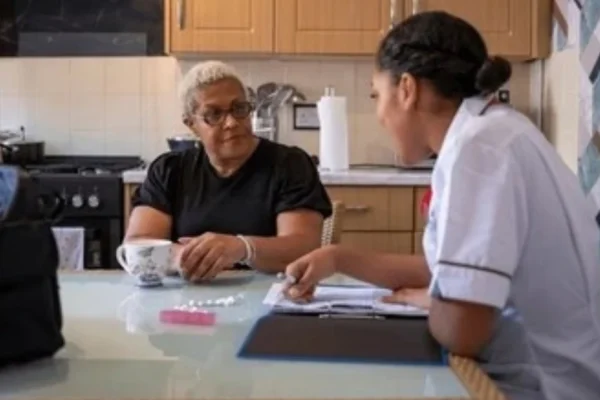
If you want to learn how to become a care worker in the UK, understanding the qualifications, training, skills, and employment requirements is an excellent place to start. Health and social care workers support older adults, people with disabilities, and individuals who need assistance with daily activities. Many entry-level positions do not require a university degree or previous professional experience, although employers may expect relevant training, background checks, and specific qualifications. Whether you want to work in a residential care home, provide home care, or support people with additional needs, this guide explains how to enter the profession, prepare for job applications, understand UK care regulations, and explore opportunities for career progression.
What Does a Health and Social Care Worker Do?
A health and social care worker helps people maintain their independence, dignity, safety, and quality of life. The responsibilities vary depending on the person’s needs, the care setting, and the worker’s training and level of responsibility.
Care workers may support older people, individuals with physical disabilities, people with learning disabilities, and those living with dementia or other long-term conditions.
Common responsibilities include:
Care workers must follow care plans, maintain professional boundaries, and carry out only those duties for which they are appropriately trained and competent.
How to Become a Care Worker UK: Step-by-Step Guide
You can enter the UK care sector through several pathways, including direct applications, college courses, apprenticeships, and volunteering. The best route depends on your experience, career goals, and the requirements of the position you want.
Understand the Different Care Worker Roles
Before starting your job search, explore the different types of care work available.
Care assistant: Supports individuals with personal care, meals, mobility, and everyday activities in residential care homes or other settings.
Home care worker: Visits people in their own homes to provide practical assistance and help them maintain independence.
Support worker: Helps people with disabilities, learning disabilities, mental health needs, or other support requirements.
Residential care worker: Supports people living in residential facilities, helping them with daily routines, personal care, and social activities.
Healthcare support worker: Assists healthcare teams in hospitals, clinics, and community healthcare settings, working within the responsibilities of the role.
Specialist support worker: Provides tailored support to people with particular needs, such as dementia, autism, or complex support requirements.
Researching these roles can help you identify suitable vacancies and understand the training, experience, and checks you may need.
Check the Entry Requirements
Entry requirements differ between employers and care settings. Many employers recruit candidates without previous professional care experience and provide appropriate workplace training.
Typical requirements may include:
Some employers prefer candidates with GCSEs in English and mathematics or equivalent qualifications. Other positions may require previous care experience, a relevant health and social care qualification, or specialist training.
Always read the job advertisement carefully to understand the actual requirements before applying.
Choose a Relevant Health and Social Care Course
Although a formal qualification is not essential for every entry-level care worker job, relevant training can help you develop foundational knowledge and demonstrate your commitment to the profession.
Useful learning areas include:
A health and social care course can help you understand the responsibilities involved in supporting people safely and respectfully.
For example, the Level 3 Diploma in Health and Social Care from Virtual Skills Academy is an option to explore if you want to develop your knowledge of care principles, safeguarding, communication, and professional practice.
Before enrolling, check the course syllabus, provider details, qualification or accreditation status, and whether the course meets the requirements of your intended employer. A course advertised at Level 3 is not automatically equivalent to a regulated Level 3 qualification.
Gain Practical Experience
Practical experience can help you understand the realities of care work and develop skills that employers value.
You could gain relevant experience by applying for trainee or entry-level care positions, volunteering with suitable community organisations, or seeking supervised work experience in an appropriate care setting.
Experience in customer service, hospitality, retail, or community work may also demonstrate transferable skills such as communication, teamwork, patience, and reliability.
When volunteering or gaining experience, always respect the privacy, dignity, and safety of the people receiving support. Do not perform personal care or other restricted duties unless you have the appropriate training, supervision, and authorization.
Apply for Care Worker Jobs
Once you have researched the role and developed relevant knowledge, start looking for vacancies.
Useful job-search resources include:
Search using job titles such as care worker, care assistant, support worker, home care worker, and residential care worker.
Prepare a CV highlighting your communication skills, empathy, reliability, relevant training, and transferable experience. During interviews, be ready to explain how you would protect confidentiality, respect a person’s choices, respond to safeguarding concerns, and work effectively with colleagues.
Complete Employer Induction and Workplace Training
After accepting a job, you will usually need to complete an induction and training relevant to your responsibilities.
Depending on the position, this may cover safeguarding, infection prevention, moving and handling, fire safety, confidentiality, emergency procedures, and workplace policies.
In England, the Care Certificate standards provide a framework for the knowledge, skills, and behaviours expected of relevant workers who are new to health and social care. The standards were updated in March 2025 and now cover 16 areas, including learning disabilities and autism.
The Care Certificate is not the same as a regulated qualification. Employers use the standards to support induction, learning, and the assessment of workplace competence.
You can find the current standards through Skills for Care’s Care Certificate guidance.
What Qualifications Do You Need to Become a Care Worker in the UK?
There is no single qualification requirement that applies to every care worker position across the UK. Requirements depend on the employer, job responsibilities, care setting, and relevant national regulations.
Some employers accept applicants without formal care qualifications and provide workplace training. Others prefer relevant qualifications or require specific competencies before workers undertake particular duties.
The following options may be useful:
|
Qualification or training |
How it can help |
|
Introductory health and social care course |
Builds foundational knowledge of care principles and responsibilities. |
|
Level 2 health and social care qualification |
Supports further learning and preparation for appropriate care roles. |
|
Level 3 health and social care qualification |
Can deepen knowledge and support longer-term career development, depending on the qualification. |
|
Care Certificate standards |
Provide a foundation for relevant induction and workplace assessment in England. |
|
Safeguarding training |
Helps workers recognise, prevent, and report abuse or neglect. |
|
Infection prevention training |
Develops understanding of hygiene and infection control. |
|
Moving and handling training |
Helps workers support mobility safely and appropriately. |
|
First aid or basic life support training |
May be required or recommended depending on the role. |
A relevant qualification can be useful, but it does not automatically guarantee employment, professional registration, or authorization to perform every care task.
Do You Need a Care Certificate?
The Care Certificate standards are designed to establish a foundation of knowledge, skills, and behaviours for relevant health and social care roles in England.
The standards cover areas such as duty of care, communication, safeguarding, person-centred care, infection prevention, and supporting people with specific needs.
Employers can use these standards to structure induction and assess whether employees can apply their learning in practice.
The Care Certificate standards and the Level 2 Adult Social Care Certificate qualification are related but distinct. The standards provide an induction and competency framework, whereas the qualification is a separate learning and assessment route.
Scotland, Wales, and Northern Ireland have their own workforce frameworks and regulatory arrangements. Check the appropriate guidance for the country where you intend to work.
Do You Need a DBS Check to Become a Care Worker?
A criminal record check may be required for care work, depending on the duties involved and the eligibility rules for the position.
In England and Wales, care workers who undertake eligible regulated activity with adults may be eligible for an Enhanced Disclosure and Barring Service (DBS) check with an Adults’ Barred List check. The appropriate level depends on the activities performed rather than the job title alone.
Scotland uses Disclosure Scotland, while Northern Ireland uses AccessNI.
Employers may also check references, identity documents, employment history, and right-to-work status.
For the latest requirements, consult the official DBS checks for adult social care roles guidance.
Your employer should explain which background checks are appropriate for the position.
What Skills Do You Need to Be a Successful Care Worker?
Care work requires more than practical knowledge. Personal qualities and interpersonal skills are essential for delivering safe, respectful, and person-centred support.
Communication Skills
Care workers need to listen carefully, explain information clearly, and adapt their communication to individual needs. Effective communication also helps workers maintain accurate records, report concerns, and collaborate with colleagues.
Empathy and Patience
Individuals receiving care may experience anxiety, loneliness, frustration, or difficulties with everyday activities. Patience and empathy help workers respond sensitively and build trusting relationships.
Reliability and Responsibility
People may depend on care workers for essential daily support. Arriving on time, following care plans, completing records accurately, and reporting concerns promptly are important responsibilities.
Teamwork
Care workers often collaborate with colleagues, supervisors, healthcare professionals, and family members. Good teamwork helps maintain continuity of care while respecting privacy and professional boundaries.
Attention to Detail
Changes in a person’s behaviour, appetite, mobility, or general well-being may indicate a need for additional support. Care workers must observe relevant changes and report concerns according to workplace procedures.
Respect for Dignity and Independence
Person-centred care means respecting individual rights, choices, preferences, and privacy. Rather than unnecessarily taking over tasks, care workers should encourage people to maintain as much independence as possible.
Build Your Health and Social Care Knowledge
Develop your understanding of person-centred care, safeguarding, communication, and essential health and social care practices with the Level 3 Diploma in Health and Social Care from Virtual Skills Academy. Take a practical step towards preparing for opportunities in the care sector.
Where Can You Work as a Health and Social Care Worker?
Health and social care workers can work in a range of settings throughout the UK.
Residential care homes: Support residents with personal care, daily activities, meals, and social interaction.
Nursing homes: Provide practical care to residents who may also require nursing support from appropriately qualified professionals.
Private homes: Help individuals maintain independence while receiving care in their own homes.
Supported living services: Support people with disabilities or additional needs to manage everyday tasks and make their own choices.
Hospitals and community healthcare settings: Healthcare support workers assist clinical teams with duties appropriate to their role and training.
Mental health and disability services: Help individuals maintain well-being, develop daily living skills, and participate in their communities.
The workplace you choose can influence the training, experience, working hours, travel requirements, and progression opportunities available to you.
How Much Do Care Workers Earn in the UK?
Care worker salaries vary depending on location, employer, experience, responsibilities, and working hours.
The National Careers Service care worker profile lists an indicative annual salary range of approximately £20,000 for starters to £25,000 for experienced workers. These figures are general estimates, not guaranteed salaries, and individual vacancies may offer different rates.
Additional pay may be available for night shifts, weekends, overtime, or particular responsibilities.
When comparing job offers, consider the hourly rate or annual salary, contracted hours, travel requirements, training arrangements, and employment benefits. You should also check the applicable legal minimum wage using the official GOV.UK National Minimum Wage guidance.
Salary should not be your only consideration. Workplace culture, management support, development opportunities, and working conditions can also affect your long-term career satisfaction.
Career Progression Opportunities in Health and Social Care
Starting as a care worker can provide a foundation for further learning and career development.
Depending on your experience, qualifications, skills, and applicable requirements, potential progression routes include:
Some positions require additional qualifications, management experience, demonstrated competence, or registration with the relevant regulator. Career progression is not automatic, and requirements differ by role and UK nation.
Continuing professional development can help you strengthen your safeguarding knowledge, communication skills, understanding of care planning, and ability to support people with more complex needs.
If you are interested in management, consider developing skills in leadership, staff supervision, recordkeeping, quality assurance, and service improvement.
Health and Social Care Regulations Across the UK
Understanding the regulatory framework is important because health and social care requirements differ across England, Scotland, Wales, and Northern Ireland.
England: The Care Quality Commission (CQC) regulates relevant health and adult social care services. The Care Act 2014 is an important part of the adult social care framework.
Scotland: The Care Inspectorate regulates relevant care services, while the Scottish Social Services Council (SSSC) oversees registration for specified social service roles.
Wales: Care Inspectorate Wales (CIW) regulates relevant care services, while Social Care Wales has responsibilities for workforce registration and professional standards.
Northern Ireland: The Regulation and Quality Improvement Authority (RQIA) regulates relevant health and social care services, while the Northern Ireland Social Care Council (NISCC) oversees registration for specified social care roles.
You can find more information through the Care Quality Commission, Care Inspectorate, Care Inspectorate Wales, and Northern Ireland Social Care Council.
Registration and qualification requirements depend on the role and the duties performed. For example, specified social care roles in Scotland and Northern Ireland have registration requirements. Check the relevant regulator and employer guidance before assuming that requirements in one UK nation apply everywhere.
Can You Become a Care Worker in the UK Without Experience?
Yes. Some employers recruit applicants without previous professional care experience and provide induction, workplace training, and supervision.
You can improve your preparation by learning about safeguarding, person-centred care, infection prevention, communication, and confidentiality. Relevant training can demonstrate your commitment to the sector, although employers may have specific qualification requirements.
Transferable skills gained through customer service, hospitality, retail, volunteering, or community activities may also help demonstrate responsibility, empathy, teamwork, and communication.
When applying for jobs, be honest about your experience and qualifications. Employers must ensure that staff are suitably trained and competent for the duties they perform.
Can International Applicants Become Care Workers in the UK?
International applicants must meet the relevant immigration and right-to-work requirements in addition to the employer’s recruitment criteria.
An important change took effect on 22 July 2025, when the UK closed the overseas recruitment route for new care worker and senior care worker applicants. Transitional arrangements allow certain eligible people already in the UK to apply under specific conditions, subject to the applicable immigration rules and deadlines.
This means applicants living outside the UK should not assume that a care worker vacancy offers a route to new visa sponsorship. Eligibility depends on immigration status, employment circumstances, the sponsor, and the route under which an application is made.
Before accepting a job offer, paying recruitment-related fees, or planning to relocate, check the current GOV.UK Health and Care Worker visa guidance and the official guidance on applying for health and social care jobs in the UK from abroad.
A health and social care course certificate does not provide immigration permission or guarantee a sponsored position.
How to Prepare for Your First Care Worker Job
If you want to enter the care sector, focus on building foundational knowledge, developing transferable skills, and understanding the responsibilities of the profession.
Start by researching job vacancies in your preferred location. Compare the entry requirements for several positions to identify the qualifications, training, and experience that employers commonly request.
Next, consider relevant training and prepare a CV that highlights your communication skills, reliability, and willingness to learn. Familiarise yourself with safeguarding, confidentiality, infection prevention, and person-centred care so you can discuss these topics confidently during interviews.
Once employed, make the most of your induction, supervision, and professional development opportunities. Ask questions when you are unsure about a procedure, follow workplace policies, and report concerns promptly.
Building a career in health and social care requires commitment, professionalism, and continuous learning. Taking these steps can help you prepare for suitable opportunities and make informed decisions about your future.
Build Your Health and Social Care Knowledge
Developing your knowledge of health and social care can be a useful step towards exploring care worker opportunities. Understanding person-centred support, safeguarding, communication, health and safety, and professional responsibilities can help you prepare for the demands of the sector.
Virtual Skills Academy’s Level 3 Diploma in Health and Social Care is an option to explore if you want to strengthen your foundational knowledge and prepare for further learning.
Review the course content, provider information, and qualification status to ensure that it aligns with your learning objectives and intended career pathway.
Frequently Asked Questions
How long does it take to become a care worker in the UK?
The time required depends on the position, employer, and training needed. Some entry-level roles accept applicants without previous experience and provide workplace induction, while other positions require relevant qualifications or additional preparation.
Do you need a degree to become a care worker in the UK?
No. A university degree is not generally required for entry-level care worker positions. Employers set their own requirements, and some may prefer a relevant health and social care qualification or previous experience.
What qualifications are best for a new care worker?
Relevant health and social care training can help you understand safeguarding, communication, personal care, and professional responsibilities. A Level 2 or Level 3 qualification may be useful, but you should check whether the specific qualification meets your intended employer’s requirements.
Do care workers need a DBS check in the UK?
Some care roles require criminal record checks at an appropriate level, depending on the duties and eligibility rules. England and Wales use the DBS system, while Scotland and Northern Ireland have separate disclosure arrangements.
Can international applicants get a UK care worker visa in 2026?
The overseas recruitment route for new care worker and senior care worker applicants closed on 22 July 2025. Specific transitional arrangements may apply to eligible people already in the UK, so applicants should check the latest official immigration guidance before making employment or relocation plans.
Build Your Health and Social Care Knowledge
Develop your understanding of person-centred care, safeguarding, communication, and essential health and social care practices with the Level 3 Diploma in Health and Social Care from Virtual Skills Academy. Take a practical step towards preparing for opportunities in the care sector.
Final Thoughts
Becoming a health and social care worker in the UK can be a rewarding career path if you enjoy helping others and making a positive difference in their lives. By understanding the entry requirements, developing essential care skills, completing relevant training, and gaining practical experience, you can prepare for suitable opportunities in the sector. Start by researching local vacancies, identifying the skills employers expect, and choosing training that supports your career goals. Remember that requirements vary depending on the role and the UK nation where you intend to work. With patience, compassion, professionalism, and a commitment to continuous learning, you can build your knowledge and work towards a fulfilling career in health and social care.