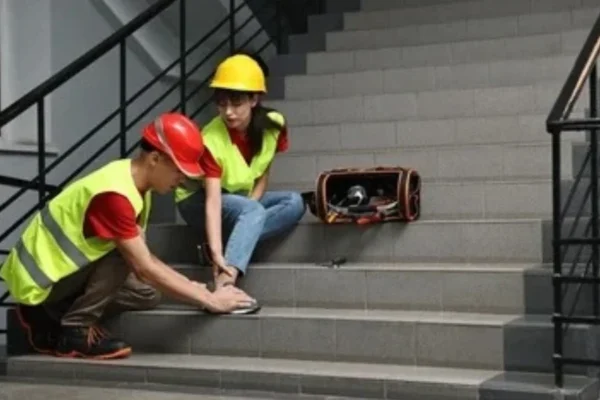
A health and safety risk assessment is an essential part of keeping people safe in the workplace. It helps employers identify potential hazards, understand who could be harmed and decide what measures are needed to prevent accidents and work-related ill health. Whether you manage an office, construction site, warehouse, restaurant or healthcare facility, carrying out an effective risk assessment can help you meet your legal responsibilities and create a safer working environment.
In the UK, employers must assess workplace risks and take appropriate steps to control them. The process does not have to be complicated, but it must be suitable and sufficient for the work being carried out. Understanding how to complete a risk assessment is therefore an important skill for managers, supervisors, business owners and health and safety professionals.
This guide explains the five main steps of a workplace risk assessment, provides practical examples and highlights common mistakes to avoid.
What Is a Health and Safety Risk Assessment?
A health and safety risk assessment is a systematic examination of workplace activities to identify anything that could cause injury or ill health. It considers the likelihood of harm occurring, the possible severity of the consequences and the precautions needed to eliminate or reduce the risk.
The process involves two important concepts:
For example, a wet floor in a busy corridor is a hazard. The risk is that an employee or visitor could slip, fall and sustain an injury. Placing warning signs, cleaning the spill promptly and restricting access until the floor is dry can help control that risk.
According to the Health and Safety Executive (HSE), employers must identify what could cause injury or illness, assess the risks and take action to eliminate hazards or control the risks where elimination is not possible.
Why Is a Health and Safety Risk Assessment Important?
An effective risk assessment helps organisations understand workplace dangers and take practical action before incidents occur. It also supports better decision-making by making health and safety responsibilities clearer.
The main benefits include:
Preventing accidents and injuries
Identifying hazards early allows employers to introduce appropriate safety measures, helping reduce incidents such as slips, trips, falls, machinery injuries and manual-handling accidents.
Protecting employees and visitors
Risk assessments consider everyone who may be affected by workplace activities, including employees, contractors, customers, visitors and members of the public.
Supporting legal compliance
UK employers have duties under health and safety legislation to assess and control workplace risks. A suitable and sufficient assessment helps demonstrate that these responsibilities have been considered and addressed.
Improving workplace practices
The process can reveal unsafe working methods, inadequate equipment, insufficient training and weaknesses in existing procedures.
Reducing disruption and costs
Preventing accidents can help reduce sickness absence, equipment damage, operational disruption and the costs associated with workplace incidents.
Building a positive safety culture
Involving employees in risk assessments encourages them to report hazards, follow safe procedures and take greater responsibility for workplace safety.
Who Needs to Carry Out a Risk Assessment?
Employers are responsible for ensuring that workplace risks are assessed and controlled. Depending on the size and nature of the organisation, a suitable assessment may be completed by a manager, supervisor, health and safety professional or another competent person.
Self-employed people must also assess risks where health and safety law applies to their work.
The person carrying out the assessment should understand the relevant work activities, recognise potential hazards and know how to identify appropriate control measures. They should seek specialist advice when the risks are complex or require technical knowledge.
Employees should also be consulted. Workers often understand the practical challenges of their jobs and may identify hazards that are not immediately obvious to managers.
A risk assessment does not always need to be completed by an external consultant. However, higher-risk activities may require additional expertise, particularly where specialist equipment, hazardous substances or complex working conditions are involved.
How to Complete a Health and Safety Risk Assessment
The HSE recommends a five-step approach to workplace risk assessment. The following steps provide a practical framework that organisations can adapt to their activities.
Identify the Hazards
The first step is to identify anything in the workplace that could cause injury or ill health.
Start by inspecting the workplace and observing how tasks are performed. Consider routine activities as well as occasional tasks such as maintenance, cleaning, equipment repairs and deliveries.
Common workplace hazards include:
Review accident records, near-miss reports, previous assessments, equipment instructions and relevant safety data sheets where appropriate. Speak to employees about hazards they encounter during their work.
Remember that hazards may affect physical health, mental health or both. A thorough assessment should consider the actual conditions and activities within the workplace rather than relying solely on a generic checklist.
Identify Who Might Be Harmed and How
Once the hazards have been identified, determine who could be affected and how harm might occur.
Consider everyone who may come into contact with the hazard, including:
For example, a poorly positioned electrical cable could cause an employee to trip. If it crosses a public reception area, visitors could also be at risk.
Think about the type of harm that could occur. This might include cuts, burns, fractures, respiratory problems, musculoskeletal injuries or longer-term health effects.
Identifying the people at risk helps ensure that control measures protect everyone who could reasonably be affected, not just the employees performing the task.
Evaluate the Risks and Decide on Control Measures
The next step is to evaluate each risk and determine whether the existing precautions are sufficient.
Consider two main factors:
Some organisations use a risk matrix to assign scores to hazards. For example, they may rate likelihood and severity on a scale from one to five and multiply the scores to produce a risk rating. This can help prioritise actions, although the scoring system must be appropriate to the organisation and should not replace professional judgement.
Consider what controls are already in place and whether additional measures are necessary.
Where possible, eliminate the hazard completely. If that is not reasonably practicable, consider ways to reduce the risk.
For example, if employees regularly carry heavy boxes, possible measures include reducing the weight of individual loads, redesigning the storage area, using suitable lifting equipment and providing appropriate instruction.
A useful principle is to prioritise stronger control measures over relying solely on individual behaviour or personal protective equipment. Training and protective equipment can be important, but they may not be sufficient when a hazard can be removed or controlled more effectively.
The HSE provides further guidance on managing workplace risks.
Record Your Findings
Recording the findings helps ensure that important hazards, decisions and safety actions are documented clearly.
In Great Britain, employers with five or more employees must record the significant findings of their risk assessments. Smaller employers are not generally required to record those findings under this specific rule, but keeping a written record is still good practice. Other legal duties may require particular assessments or records regardless of workforce size.
A useful risk assessment record should include:
The record should be clear enough for managers and employees to understand what needs to be done.
For example, an assessment might identify a trailing cable across a walkway. The action could be to reroute the cable or use a suitable cable-management system, with a named person responsible for completing the work by an agreed date.
Recording a hazard is not enough on its own. The organisation must put the necessary control measures into practice and check that they are effective.
Review the Risk Assessment Regularly
A risk assessment should remain relevant as workplace conditions, equipment, staff and working methods change.
Review the assessment periodically and whenever there is a reason to believe it may no longer be valid. Examples include:
The review frequency should reflect the nature of the activity and the level of risk. Some assessments may need frequent checks, while others can be reviewed less often if conditions remain stable.
When changes are necessary, update the assessment and communicate the revised arrangements to the people affected.
A risk assessment should be treated as a working document that supports safer practices, rather than a form completed once and forgotten.
Build Your Workplace Safety Knowledge
Learn how to identify hazards, assess workplace risks and understand practical safety controls with Virtual Skills Academy’s Health and Safety Level 3 course. Strengthen your knowledge and develop skills that can support safer working practices.
Health and Safety Risk Assessment Example
Consider a small office where employees use a shared kitchen and walk through a corridor to reach their desks.
|
Hazard |
Who might be harmed? |
Possible harm |
Control measures |
|
Wet kitchen floor |
Employees and visitors |
Slips, falls and injuries |
Clean spills promptly, display warning signs where appropriate and keep the floor in good condition. |
|
Trailing electrical cables |
Employees and visitors |
Trips, falls and possible electrical injury |
Route cables safely, inspect damaged equipment and remove defective items from use. |
|
Heavy boxes stored overhead |
Employees and contractors |
Falling objects, head injuries and strains |
Store heavy items at a suitable height and secure shelving appropriately. |
|
Blocked fire exit |
Everyone in the building |
Delayed evacuation and increased injury risk |
Keep escape routes clear and check that exit doors and routes remain usable. |
|
Poor workstation setup |
Office employees |
Musculoskeletal discomfort and other health problems |
Assess workstation arrangements, adjust equipment and provide suitable guidance. |
This example demonstrates how a risk assessment connects a hazard to the people who could be harmed and the actions needed to reduce the risk.
Actual control measures should always reflect the specific workplace, equipment, activities and people involved. A generic example is a starting point, not a substitute for assessing the real conditions.
How to Use a Risk Assessment Matrix
A risk assessment matrix can help organisations compare risks and decide which actions require the greatest priority.
A simple matrix may classify likelihood and severity as low, medium or high. The resulting rating can help managers identify where immediate action may be necessary and where existing precautions may be adequate.
For example, a hazard that is likely to cause a serious injury should normally receive greater attention than a hazard with a low likelihood of minor harm, provided the assessment also considers applicable legal requirements and the effectiveness of current controls.
However, risk ratings should not be treated as exact scientific measurements. A low numerical score does not justify ignoring a hazard that could result in severe harm or where required controls are missing.
Use the matrix alongside a clear explanation of the hazard, the people affected and the actions required. The main purpose is to improve safety decisions, not simply to produce a score.
Common Health and Safety Risk Assessment Mistakes
Even when organisations follow a formal process, certain mistakes can make their assessments less effective.
Using Generic Templates Without Reviewing the Workplace
Templates can provide a helpful structure, but copying a completed assessment from another organisation may leave important hazards unidentified.
Adapt the assessment to the actual workplace, activities, equipment and people involved.
Ignoring Employees’ Feedback
Employees often understand the risks associated with their daily tasks. Failing to consult them may mean that practical hazards or weaknesses in existing procedures are overlooked.
Encourage workers to report unsafe conditions and contribute to discussions about control measures.
Focusing Only on Visible Hazards
Wet floors, exposed wires and damaged machinery are relatively easy to notice. Other hazards, including excessive workloads, poor ergonomics, hazardous substances and long-term exposure to noise, may require closer examination.
Consider both immediate dangers and risks that could affect health over time.
Recording Risks Without Taking Action
A written assessment does not make a workplace safe by itself. Identified improvements must be implemented, responsibilities assigned and control measures checked.
Prioritise actions according to the level of risk and any applicable legal requirements.
Failing to Review the Assessment
An assessment can become outdated when equipment, staff, working practices or workplace conditions change. Review it when necessary and ensure that the recorded information reflects current arrangements.
Relying Too Heavily on Personal Protective Equipment
Personal protective equipment, such as gloves, eye protection and safety footwear, may be necessary. However, it should not automatically be the first or only response to a hazard.
Consider whether the hazard can be eliminated or controlled more effectively through changes to equipment, materials, workplace design or working methods.
Health and Safety Risk Assessment Legal Requirements in the UK
UK employers have legal responsibilities to assess and control workplace risks. The precise legislation and enforcement arrangements depend on where the work takes place and the nature of the activity.
In Great Britain, the Management of Health and Safety at Work Regulations 1999 establish general risk assessment duties. Employers must make a suitable and sufficient assessment of risks to employees and others who may be affected by their work, and take appropriate preventive and protective measures.
The Health and Safety at Work etc. Act 1974 also establishes important duties relating to workplace health and safety in Great Britain.
Northern Ireland has separate legislation, including the Management of Health and Safety at Work Regulations (Northern Ireland) 2000 and the Health and Safety at Work (Northern Ireland) Order 1978. Guidance is available from the Health and Safety Executive for Northern Ireland.
Depending on the workplace, additional requirements may apply to activities such as manual handling, work equipment, hazardous substances, fire safety and working at height.
Employers should identify the rules relevant to their operations and obtain competent advice where necessary. A general risk assessment does not replace specific assessments or procedures required for particular hazards.
Who Can Benefit from Learning Risk Assessment Skills?
Understanding risk assessment is valuable for people who have responsibility for workplace safety or need to recognise hazards during their daily work.
This includes:
Formal learning can help develop an understanding of hazard identification, risk evaluation, control measures, documentation and review procedures. However, the level of training required depends on the hazards involved, the person’s responsibilities and the complexity of the workplace.
Frequently Asked Questions
What is a health and safety risk assessment?
A health and safety risk assessment is a process used to identify workplace hazards, determine who could be harmed and evaluate the risks involved. It helps employers decide what measures are needed to prevent injury and work-related ill health. Assessments should reflect actual workplace activities and conditions.
What are the five steps of a risk assessment?
The five steps are identifying hazards, deciding who might be harmed and how, evaluating the risks and deciding on precautions, recording significant findings, and reviewing the assessment. These steps provide a structured way to manage workplace risks. The assessment should be updated when circumstances change or existing controls are no longer effective.
Is a risk assessment a legal requirement in the UK?
Yes, employers generally have a legal duty to assess workplace risks under the relevant health and safety legislation. In Great Britain, the Management of Health and Safety at Work Regulations 1999 establish general risk assessment requirements. Northern Ireland has separate legislation, so employers should check the rules that apply to their location and activities.
Who is responsible for completing a workplace risk assessment?
Employers are responsible for ensuring that suitable and sufficient risk assessments are carried out. A competent manager, supervisor, health and safety professional or another suitably knowledgeable person may conduct the assessment, depending on the risks involved. Specialist advice may be necessary for complex or high-risk activities.
How often should a health and safety risk assessment be reviewed?
There is no single review interval that is suitable for every workplace. Assessments should be reviewed regularly and whenever there is a reason to believe they may no longer be valid, such as a change in equipment, working practices or workplace conditions. Accidents, near misses and reports of new hazards may also indicate that a review is necessary.
Build Your Workplace Safety Knowledge
Learn how to identify hazards, assess workplace risks and understand practical safety controls with Virtual Skills Academy’s Health and Safety Level 3 course. Strengthen your knowledge and develop skills that can support safer working practices.
Final Thoughts
A health and safety risk assessment is an essential process for identifying workplace hazards, protecting people and deciding which precautions are needed. By identifying hazards, assessing who could be harmed, implementing effective controls, recording significant findings and reviewing the assessment regularly, organisations can take a structured approach to workplace safety. The most important step is to turn assessment findings into practical action and make sure control measures remain effective. Developing your health and safety knowledge can help you understand these responsibilities and contribute to a safer working environment.