A reliable food safety checklist helps UK restaurants and cafés maintain high hygiene standards, protect customers from foodborne illness and prepare for food safety inspections. Whether you operate a busy restaurant, a neighbourhood café, a takeaway or a small catering business, consistent food safety checks are essential for everyday operations.
Food safety involves much more than keeping kitchen surfaces clean. Staff must handle ingredients correctly, prevent cross-contamination, control food temperatures, manage allergens and maintain accurate records. A clear checklist helps managers and employees follow the same procedures throughout the working day.
In this guide, you will find a practical workplace food safety checklist for UK restaurants and cafés, covering opening checks, food preparation, cooking, storage, cleaning, allergen management and closing duties.
Why Is a Food Safety Checklist Important?
A food safety checklist provides a structured way to identify hazards and confirm that essential hygiene procedures are being followed. It helps food business operators demonstrate that they are managing food safety effectively.
According to the UK Government’s food hygiene guidance for businesses, food businesses must have appropriate procedures for managing food safety. Poor food hygiene can result in a low hygiene rating, enforcement action, closure or prosecution.
A well-maintained checklist can help your restaurant or café to:
A checklist should reflect the food you prepare, the equipment you use and the risks associated with your particular business. It should also form part of your wider food safety management system rather than replace it.
Workplace Food Safety Checklist for Restaurants and Cafés
Use the following checklist as a practical starting point for daily operations. Assign responsibility for each check and record any problems, corrective actions and follow-up checks.
Opening and Before-Service Checks
Complete these checks before food preparation begins or the premises opens to customers.
If a fridge is too warm, a delivery arrives at an unsafe temperature or equipment is not working correctly, do not simply tick the box and continue. Assess the affected food, follow your food safety procedures and record the corrective action.
Personal Hygiene Checklist
Food handlers can transfer harmful bacteria, viruses and other contaminants to food if they do not follow appropriate hygiene practices.
Use this personal hygiene checklist for kitchen staff, café workers, food servers and anyone involved in preparing or handling food.
As a general food safety rule, food handlers should not work with food while suffering from vomiting or diarrhoea. They should normally remain away from food handling until at least 48 hours after symptoms have stopped, unless specific medical or public health advice requires a different approach.
Managers should ensure that staff understand the reporting procedure and never feel pressured to handle food while unwell.
For more guidance, consult the Food Standards Agency’s food hygiene resources.
Food Delivery and Receiving Checklist
Food safety begins before ingredients reach the kitchen. Restaurants and cafés should purchase food from reputable suppliers and check deliveries when they arrive.
Do not accept food simply because it has been delivered by a familiar supplier. If a product appears unsafe, isolate or reject it and contact the supplier.
The GOV.UK guidance on managing food safety provides further advice on checking deliveries, suppliers and food traceability.
Food Storage and Temperature Control Checklist
Incorrect storage temperatures can allow harmful bacteria to multiply. Restaurants and cafés should follow safe storage procedures and use suitable equipment to monitor temperatures.
A useful distinction is that a use-by date relates to safety, whereas a best-before date generally relates to quality. Do not serve food beyond its use-by date, even if it looks and smells normal.
If refrigeration fails, assess the affected food and the time and temperature involved. Follow your food safety management procedures before deciding whether the food can be retained or must be discarded.
Food Preparation and Cross-Contamination Checklist
Cross-contamination occurs when harmful bacteria, allergens or other contaminants transfer from one surface, ingredient or item to another. It is a major risk in kitchens where raw meat, vegetables, cooked foods and ready-to-eat products are handled.
Colour-coded chopping boards can help staff separate tasks, but colour coding alone does not prevent contamination. Employees must understand how to clean equipment properly and when to change utensils or work areas.
For additional advice, read the Food Standards Agency’s guidance on avoiding cross-contamination.
Cooking and Reheating Checklist
Cooking food thoroughly is an important way to reduce the risk of foodborne illness. Particular care is needed when preparing poultry, minced meat, rolled joints and other foods that may contain harmful bacteria.
The Food Standards Agency identifies 70°C for two minutes, or an equivalent time-and-temperature combination, as a safe cooking benchmark for many foods. Other combinations may be suitable when they achieve an equivalent level of safety. Your procedures should specify the appropriate standard for each product.
Do not rely solely on the colour or appearance of meat where a temperature check is needed. A food probe provides a more reliable way to verify internal temperature.
See the Food Standards Agency’s guidance on cooking food safely for further information.
Chilling and Cooling Checklist
Cooked food that needs to be stored for later use must be cooled safely. Leaving large quantities of food at room temperature for too long can allow harmful bacteria to multiply.
Avoid leaving large pots of soup, sauce or cooked rice at room temperature for extended periods. The centre of a large container can take much longer to cool than the outside.
Your food safety management system should specify safe cooling procedures for the foods you prepare. These procedures should be practical for the equipment, portion sizes and volumes used in your kitchen.
Allergen Management Checklist
Allergen management is a vital part of food safety in restaurants and cafés. Customers may experience serious reactions if they are given food containing an allergen they need to avoid.
UK food businesses must provide appropriate allergen information and manage allergen risks. The rules and detailed guidance can vary by nation and by how food is supplied, so businesses should follow the requirements that apply to their location and service model.
Use this checklist to strengthen allergen controls:
The 14 regulated allergens include cereals containing gluten, crustaceans, eggs, fish, peanuts, soya, milk, nuts, celery, mustard, sesame, sulphur dioxide and sulphites above the relevant threshold, lupin, and molluscs.
Never assume that removing an ingredient from a finished dish makes it safe for an allergic customer. Cross-contact may already have occurred during preparation or cooking.
The Food Standards Agency provides an allergen checklist for food businesses and detailed allergen guidance.
Cleaning and Disinfection Checklist
Cleaning removes dirt, food debris and grease. Disinfection reduces harmful microorganisms when carried out correctly. Both are important in a commercial kitchen.
A cleaning schedule should identify what needs cleaning, how it should be cleaned, how often the task must be completed and who is responsible.
Do not assume that wiping a surface with a damp cloth is sufficient. The correct method depends on the surface, the type of contamination and the product being used.
Pest Control and Waste Management Checklist
Pests can contaminate food, damage packaging and create serious hygiene problems. Effective waste management and routine inspections help reduce these risks.
If pests are discovered near food, assess whether ingredients, packaging or equipment have been contaminated. Isolate affected items and follow the appropriate corrective procedures.
Equipment and Premises Checklist
Food safety also depends on the condition of the building, fixtures and equipment used to prepare and serve food.
Damaged surfaces, broken seals, faulty fridge doors and malfunctioning equipment can undermine otherwise good hygiene practices. Report problems promptly and assess whether the affected equipment can continue to be used safely.
Staff Training and Food Safety Records Checklist
Every food business needs appropriate food safety management procedures. Staff should receive training or supervision that matches their duties and level of responsibility.
A food hygiene certificate is not a universal legal requirement for every food handler. However, food handlers must receive appropriate supervision and training in food hygiene matters commensurate with their work activities, and managers must ensure that the business meets its legal food safety responsibilities.
For practical guidance, consult the GOV.UK advice on starting a food business.
End-of-Day Food Safety Checklist
Before closing the restaurant or café, ensure that food is stored safely and the premises are ready for the next working day.
Closing checks are particularly important when different teams work across morning, afternoon and evening shifts. A clear handover helps prevent problems from being overlooked.
Build Your Food Hygiene Knowledge
Strengthen your understanding of safe food handling, hygiene procedures, contamination prevention and catering responsibilities with Food Hygiene and Safety for Catering Level 2. Develop practical knowledge that can help you apply food safety principles confidently in restaurants, cafés and other catering environments.
Printable Daily Food Safety Checklist
The following summary can be adapted for a daily kitchen checklist. Use it alongside your full food safety management procedures.
|
Check |
What to verify |
Completed |
|
Opening |
Kitchen and work surfaces are clean |
☐ |
|
Personal hygiene |
Staff follow handwashing and hygiene procedures |
☐ |
|
Deliveries |
Food is safe, correctly labelled and in suitable condition |
☐ |
|
Refrigeration |
Chilled food is stored at the correct temperature |
☐ |
|
Freezers |
Frozen food and equipment are in suitable condition |
☐ |
|
Storage |
Raw and ready-to-eat foods are separated |
☐ |
|
Preparation |
Cross-contamination controls are followed |
☐ |
|
Cooking |
Food is cooked thoroughly and checked where required |
☐ |
|
Cooling |
Food is cooled and stored safely |
☐ |
|
Allergens |
Ingredient information is accurate and accessible |
☐ |
|
Cleaning |
Cleaning and disinfection tasks are completed |
☐ |
|
Pest control |
No signs of pest activity or contamination are found |
☐ |
|
Records |
Required checks and corrective actions are documented |
☐ |
|
Closing |
Food is stored safely and the premises are left clean |
☐ |
Date: ____________________
Business or kitchen area: ____________________
Completed by: ____________________
Manager or supervisor review: ____________________
Corrective actions required: ______________________________________
Follow-up completed by and date: __________________________________
This checklist is a starting template, not a substitute for a complete food safety management system. Adapt the checks and frequency to the risks in your business.
How Often Should Restaurants and Cafés Complete Food Safety Checks?
The frequency of food safety checks depends on the activity, the risk and the procedures established by the business.
Daily checks commonly include refrigeration temperatures, food handling practices, cleaning, deliveries, food storage and allergen controls.
Checks during service may be needed when food is cooked in batches, hot-held, cooled, reheated or prepared for customers with allergies. The frequency should be defined by your food safety procedures.
Weekly or scheduled checks may include deeper cleaning, stock and date-label reviews, pest inspections, equipment condition checks and audits of records.
Periodic reviews should assess whether the food safety management system remains effective, whether staff need refresher training and whether changes to the menu or equipment introduce new risks.
Do not use the same frequency for every check without considering the risk. A food business should decide what needs to be monitored, how often it should be checked, what constitutes an acceptable result and what action must be taken when a check fails.
What Food Safety Rules Apply to UK Restaurants and Cafés?
Food businesses across the UK must comply with applicable food hygiene and food safety requirements. The precise legislation, guidance and enforcement arrangements can differ between England, Wales, Scotland and Northern Ireland.
In general, food business operators should ensure that they:
Food businesses generally need to register with their local authority at least 28 days before starting to trade or before food operations begin. You can start the process through the Food Standards Agency’s food business registration service.
In England, Wales and Northern Ireland, the Food Standards Agency provides relevant guidance. Food Standards Scotland is the appropriate source for Scotland-specific guidance. Businesses should check the rules that apply to their location and type of operation rather than assuming that every requirement is identical across the UK.
How Can Restaurants Improve Their Food Hygiene Rating?
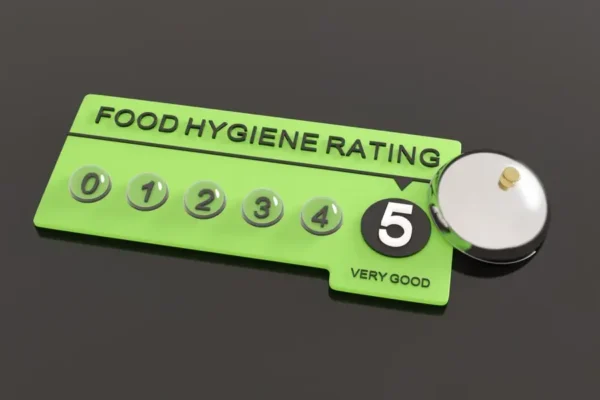
A food hygiene rating reflects the standards observed during an inspection. In England, Wales and Northern Ireland, ratings range from 0 to 5, with 5 representing very good hygiene standards. Scotland operates a different scheme, known as the Food Hygiene Information Scheme.
Although a checklist can help maintain standards, completing it does not guarantee a particular rating. Inspectors consider several aspects of the business, including food handling, the condition of the premises and how food safety is managed.
To improve hygiene standards:
Use the Food Hygiene Ratings service to find published ratings and related information. Businesses should also consult their local authority for advice about inspections, compliance and any required improvements.
Common Food Safety Mistakes to Avoid
Even experienced teams can make mistakes during busy service periods. Identifying common problems helps managers decide where additional supervision or training may be necessary.
Ignoring temperature checks: A fridge display may appear normal, but routine monitoring helps identify problems before food becomes unsafe.
Using the same equipment for raw and ready-to-eat foods: This can transfer harmful bacteria unless suitable separation and cleaning controls are used.
Guessing allergen information: Staff should always consult accurate ingredient records and established procedures rather than relying on memory.
Leaving cleaning until closing time: Food-contact surfaces and equipment may need cleaning and disinfection between tasks, not only at the end of the day.
Failing to record corrective actions: A completed checklist should show what happened when a problem was identified and how the issue was resolved.
Accepting unsafe deliveries: Suppliers should be checked consistently, and food that may be unsafe should not be used without an appropriate assessment.
Treating training as a one-off task: Staff need suitable supervision and updated instruction when responsibilities, ingredients or procedures change.
Using a generic checklist without adapting it: A café serving sandwiches and pastries has different risks from a restaurant preparing raw poultry, seafood and complex dishes. Your checklist should reflect the actual food handling activities involved.
Frequently Asked Questions
What should be included in a food safety checklist?
A food safety checklist should cover personal hygiene, food deliveries, storage temperatures, food preparation, cooking, cooling, allergen management, cleaning, pest control and staff training. It should also include relevant record-keeping and corrective actions. The exact checks should reflect the food prepared and the risks present in the business.
How often should a restaurant complete a food safety checklist?
Many restaurants complete key checks daily, while some tasks need monitoring throughout service or at specific stages of food preparation. Other activities, such as deep cleaning and equipment inspections, may follow weekly or periodic schedules. The frequency should be based on risk and documented food safety procedures.
Is a food safety checklist a legal requirement in the UK?
Food businesses must have and follow suitable food safety management procedures, generally based on HACCP principles. There is not one universal checklist that every UK restaurant must use. A checklist can help demonstrate that procedures are being followed, but it must be appropriate to the business and does not replace legal obligations.
What temperature should a fridge be in a UK restaurant?
Chilled food must generally be kept at 8°C or below under applicable food hygiene rules. Setting fridges at 5°C or below is a common best practice because it provides a safety margin. Businesses should monitor temperatures and follow their food safety procedures if equipment exceeds the acceptable limits.
Do restaurant and café staff need food hygiene training?
Food handlers must receive appropriate supervision and training in food hygiene matters that match their work activities. The training required depends on the role and responsibilities, and a food hygiene certificate is not universally compulsory for every food handler. Suitable training helps staff understand safe food handling, contamination prevention, cleaning and allergen management.
Build Your Food Hygiene Knowledge
Strengthen your understanding of safe food handling, hygiene procedures, contamination prevention and catering responsibilities with Food Hygiene and Safety for Catering Level 2. Develop practical knowledge that can help you apply food safety principles confidently in restaurants, cafés and other catering environments.
Final Thoughts
A practical food safety checklist helps restaurants and cafés build consistent hygiene habits, reduce contamination risks and protect customers. From checking deliveries and monitoring temperatures to managing allergens and maintaining clean premises, each task contributes to a safer food service environment.
The most effective checklist is one that staff understand, complete honestly and use to guide corrective action. Review it regularly, provide appropriate training and make food safety part of every shift rather than treating it as a task reserved for inspection day.