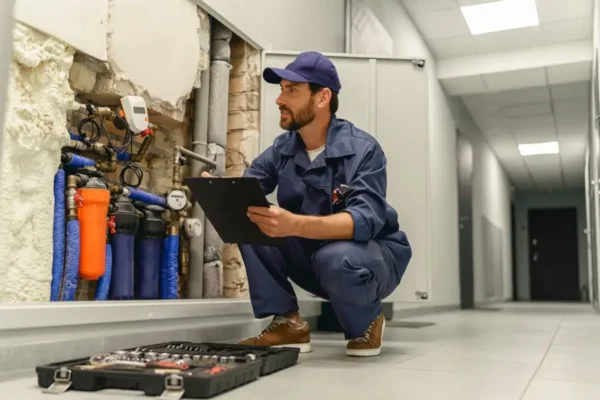
An asbestos risk assessment is an essential part of protecting workers and others who could be exposed to asbestos during work activities. Although the use of asbestos has been prohibited or heavily restricted in the UK for many years, asbestos-containing materials (ACMs) remain in older buildings and can still present a serious occupational health risk when they are disturbed.
A suitable asbestos risk assessment helps identify where exposure could occur, who may be affected, how significant the risk could be and what controls are needed to prevent or reduce exposure. It is particularly important before maintenance, refurbishment, demolition or other work that could disturb asbestos-containing materials.
This guide explains what an asbestos risk assessment is, when one is required, what it should contain and how to carry one out effectively in a UK workplace.
What Is an Asbestos Risk Assessment?
An asbestos risk assessment is a systematic assessment of the risks created by potential or known exposure to asbestos.
It considers factors such as:
Under the Control of Asbestos Regulations 2012, employers must carry out a suitable and sufficient assessment of the risk created by work that is liable to expose employees to asbestos. Significant findings must be recorded and the necessary control measures implemented.
The assessment should not simply be treated as a paperwork exercise. Its purpose is to inform how work is planned and carried out safely.
Why Is an Asbestos Risk Assessment Important?
Asbestos fibres can be released when asbestos-containing materials are damaged or disturbed.
Activities such as drilling, cutting, sanding, breaking or removing certain materials can potentially release fibres into the air.
If workers inhale asbestos fibres, there can be serious long-term health consequences, including asbestos-related diseases.
An effective risk assessment can help organisations:
The purpose is ultimately to prevent exposure or reduce it to the lowest level reasonably practicable.
Is an Asbestos Risk Assessment a Legal Requirement in the UK?
For work that is liable to expose employees to asbestos, the Control of Asbestos Regulations 2012 require a suitable and sufficient assessment of the risk created by that exposure.
The regulations also require significant findings to be recorded and the measures needed to control exposure to be implemented. The assessment must be reviewed regularly and when circumstances indicate that it may no longer be valid or when there is a significant change in the work.
There is also a separate duty to manage asbestos in non-domestic premises. Dutyholders must take reasonable steps to determine whether asbestos is present or likely to be present, consider its condition, determine the risk and prepare a written plan where asbestos is identified or suspected.
This distinction is important:
Asbestos management concerns managing asbestos in premises, while an asbestos risk assessment for work focuses specifically on the risks created by activities that could expose workers to asbestos.
Both can form part of an effective asbestos management system.
Who Needs an Asbestos Risk Assessment?
An asbestos risk assessment may be relevant to employers and organisations whose work could expose employees to asbestos.
This can include businesses involved in:
Workers may encounter asbestos unexpectedly when carrying out routine maintenance or repair work in older buildings.
This is why asbestos information should be considered before work begins rather than only after a suspicious material has been disturbed.
What Information Should Be Gathered First?
Before completing an asbestos risk assessment, it is important to establish as much reliable information as possible about the premises and proposed work.
Relevant information may include:
The Control of Asbestos Regulations require reasonable steps to be taken to establish whether asbestos is present or liable to be present. The assessment should take account of building plans and other relevant information, the age of the premises and reasonably accessible areas of the building.
Step-by-Step: How to Do an Asbestos Risk Assessment
A practical asbestos risk assessment can be approached through several stages.
Identify Where Asbestos May Be Present
The first step is determining whether asbestos is known or likely to be present.
This should involve reviewing available information and relevant asbestos surveys.
Potential ACMs can occur in many forms, including:
However, appearance alone cannot reliably confirm whether a material contains asbestos.
Where existing information is incomplete or unreliable, appropriate investigation or professional advice may be required.
Identify the Asbestos-Containing Material
Where asbestos is confirmed or assumed to be present, determine as much as possible about the material.
Relevant information can include:
The Control of Asbestos Regulations specifically require consideration of the type of asbestos and the material and condition involved when assessing work that may expose employees.
Identify the Work Activity
Next, consider exactly what workers will be doing.
For example, will they be:
Different activities can create very different levels of potential exposure.
A task that leaves an intact ACM completely undisturbed may present a different risk from drilling directly into the same material.
Determine Who Could Be Exposed
The assessment should identify people who could potentially be affected.
This can include:
Consider not only the person carrying out the work but also anyone who could enter or be affected by the work area.
Assess the Nature and Degree of Exposure
The risk assessment should consider how exposure could occur and how significant the potential exposure could be.
Relevant factors can include:
The Control of Asbestos Regulations require the risk assessment to determine the nature and degree of exposure that may occur during the work.
Consider Existing Control Measures
Next, evaluate the measures already in place.
For example:
The assessment should determine whether existing measures are sufficient or whether additional controls are required.
Decide What Additional Controls Are Needed
Where a risk remains, additional controls should be introduced.
The objective is to prevent exposure where possible or reduce it to the lowest level reasonably practicable.
Controls can involve:
The controls should be specific to the work rather than simply copied from a generic template.
Record the Significant Findings
Significant findings from the risk assessment should be recorded.
The record can include:
The record should be clear enough that relevant people can understand what risks exist and what precautions need to be followed.
Communicate the Findings
A risk assessment only provides value if the relevant people understand and follow it.
Information may need to be provided to:
Anyone who could disturb asbestos should have appropriate information before starting the relevant work.
HSE guidance emphasises the importance of passing information about the location and condition of asbestos to people who may disturb it.
Review the Assessment
An asbestos risk assessment should not be considered permanently valid.
The Control of Asbestos Regulations require risk assessments to be reviewed regularly and when there is reason to suspect they are no longer valid, when there is a significant change in the work, or where monitoring results indicate that a review is necessary.
A review may therefore be needed when:
Build Your Asbestos Risk Assessment Knowledge
Develop practical knowledge of asbestos hazards, workplace risk assessment, asbestos-containing materials, exposure prevention and effective safety controls.
Asbestos Surveys and Risk Assessments: What’s the Difference?
An asbestos survey and an asbestos risk assessment serve different purposes.
An asbestos survey is concerned with identifying and assessing asbestos-containing materials within a building.
An asbestos risk assessment considers the risks associated with exposure and the work or activities that could cause that exposure.
For example:
Survey:
There is asbestos-containing insulation around a pipe in a plant room.
Risk assessment:
A maintenance team needs to work near the pipe. The assessment considers whether the work could disturb the insulation, who could be exposed and what controls are necessary.
The survey provides important information for the risk assessment, but it does not replace the assessment of work-related exposure.
Asbestos Management Plan vs Risk Assessment
An asbestos management plan and risk assessment are also different documents.
An asbestos management plan is concerned with how asbestos risks within premises will be managed over time.
It can address:
An asbestos risk assessment is more focused on the hazards and controls associated with particular work or exposure.
Both can work together as part of an effective asbestos management system.
What Control Measures Can Be Used?
The correct controls depend on the work and the asbestos involved.
Avoiding Disturbance
The safest option may sometimes be to avoid disturbing the ACM entirely.
Work can potentially be redesigned or relocated so that the material remains intact.
Encapsulation or Sealing
In appropriate circumstances, asbestos-containing materials may be sealed or encapsulated to reduce the likelihood of fibre release.
This must be properly assessed and managed.
Restricting Access
Access controls can help prevent unnecessary exposure.
This can include:
Specialist Work Methods
Where asbestos must be disturbed, appropriate work methods should be established to control fibre release.
The method must reflect the specific material and activity involved.
Respiratory Protective Equipment
Respiratory protective equipment (RPE) can form part of asbestos control measures where appropriate.
However, RPE should not be regarded as a substitute for effective control at source.
The selection, use, fit and maintenance of RPE must be appropriate to the work.
Personal Protective Equipment
Depending on the work, appropriate protective clothing and other PPE may be necessary.
PPE requirements should be determined by the risk assessment and work procedures.
When Is Specialist Asbestos Work Required?
Not all asbestos-related work is treated in the same way.
Under the Control of Asbestos Regulations, asbestos work is broadly categorised into:
The category depends on factors including the material involved and the nature and circumstances of the work.
Higher-risk work may require a licensed contractor, while certain lower-risk activities may fall into non-licensed categories.
Some non-licensed work is nevertheless subject to additional notification and other requirements.
The classification should therefore be established before work starts rather than assumed.
Common Mistakes in Asbestos Risk Assessments
Using a Generic Template
A generic template can provide a structure, but it should not replace an assessment of the actual workplace and work activity.
The assessment needs to reflect the specific hazards and controls involved.
Starting Work Without Checking Asbestos Information
Beginning maintenance or refurbishment without checking relevant asbestos information can create avoidable risks.
Assuming an Old Survey Covers New Work
A previous survey may not provide all the information required for a particular refurbishment or intrusive activity.
The suitability of existing information should be assessed before work begins.
Failing to Consider Contractors
Contractors may be exposed to asbestos even when they are not directly employed by the organisation responsible for the building.
Relevant asbestos information should therefore be communicated before work starts.
Not Reviewing the Assessment
Changes to the work, building or asbestos information can make an existing assessment inadequate.
Risk assessments should be reviewed when circumstances require it.
Treating PPE as the Main Control
PPE can be important, but asbestos safety should focus on preventing or controlling exposure rather than relying primarily on personal protective equipment.
Asbestos Risk Assessment Checklist
Use the following as a starting point when reviewing an asbestos risk assessment:
|
Assessment Area |
Key Question |
|
Building information |
Is relevant asbestos information available? |
|
Survey |
Is the available survey suitable for the planned work? |
|
ACM identification |
Are known or suspected ACMs identified? |
|
Material condition |
Is the condition of the material understood? |
|
Work activity |
Could the work disturb asbestos? |
|
People at risk |
Who could be exposed? |
|
Exposure |
What is the likely nature and degree of exposure? |
|
Controls |
What measures will prevent or reduce exposure? |
|
Competence |
Are workers suitably trained and competent? |
|
Contractors |
Have relevant asbestos information been communicated? |
|
PPE/RPE |
Are suitable protective measures required? |
|
Emergency arrangements |
What happens if asbestos is unexpectedly disturbed? |
|
Records |
Have significant findings been recorded? |
|
Review |
When should the assessment be reviewed? |
What Should Happen If Asbestos Is Unexpectedly Discovered?
Unexpected asbestos can be encountered during maintenance, refurbishment or other work.
If a worker suspects that a material contains asbestos, they should not simply continue working.
A sensible response is:
Stop the activity → Avoid disturbing the material → Keep others away where necessary → Report the discovery → Obtain appropriate advice or assessment → Reassess the work before continuing
The exact response should follow the organisation’s asbestos procedures and the requirements applicable to the work.
Workers should never attempt to identify asbestos by deliberately damaging or sampling a material without appropriate competence and procedures.
Asbestos Risk Assessment Training
People involved in asbestos management need knowledge appropriate to their responsibilities.
Asbestos awareness training can help workers understand:
People with responsibilities for assessing and managing asbestos risks may require more detailed knowledge of risk assessment, surveys, management plans and control measures.
Training should always be appropriate to the person’s role and the type of asbestos-related work or responsibility they undertake.
Benefits of Effective Asbestos Risk Assessment
A properly developed assessment can provide several practical benefits.
Better Work Planning
Identifying asbestos risks before work begins allows organisations to plan appropriate methods and resources.
Reduced Exposure Risk
Effective controls can help prevent or minimise exposure to airborne asbestos fibres.
Clearer Responsibilities
A documented assessment can establish who is responsible for particular control measures and actions.
Improved Contractor Management
Providing relevant asbestos information to contractors can reduce the risk of accidental disturbance.
Stronger Safety Procedures
A risk assessment can help integrate asbestos controls into wider workplace health and safety arrangements.
Better Ongoing Management
Regular reviews help organisations respond when building conditions, work activities or asbestos information change.
Frequently Asked Questions About Asbestos Risk Assessment
What is an asbestos risk assessment?
An asbestos risk assessment evaluates the risk of exposure to asbestos arising from work activities. It considers the asbestos involved, the work being undertaken, who could be exposed, the potential level of exposure and the measures needed to prevent or reduce that exposure.
Is an asbestos risk assessment a legal requirement?
Under the Control of Asbestos Regulations 2012, employers must carry out a suitable and sufficient risk assessment where work is liable to expose employees to asbestos. Significant findings must be recorded and appropriate control measures implemented.
Who can carry out an asbestos risk assessment?
The assessment should be carried out by someone with suitable knowledge, experience and competence for the risks and work being assessed. The complexity of the situation may determine whether specialist asbestos advice is required.
How often should an asbestos risk assessment be reviewed?
There is no single universal review interval that makes every assessment suitable. It should be reviewed regularly and when there is reason to believe it is no longer valid, when there is a significant change in the work, or when monitoring results indicate that a review is necessary.
Does an asbestos survey replace a risk assessment?
No. An asbestos survey provides information about asbestos-containing materials in a building, while a risk assessment evaluates the risks created by exposure during particular work activities. Survey information can be an important input into the risk assessment.
Build Your Asbestos Risk Assessment Knowledge
Develop practical knowledge of asbestos hazards, workplace risk assessment, asbestos-containing materials, exposure prevention and effective safety controls.
Final Thoughts
An asbestos risk assessment is an important part of controlling the risks associated with asbestos-related work. It should identify the asbestos hazard, determine who could be exposed, assess the nature and degree of exposure and establish suitable measures to prevent or reduce that exposure.
In the UK, the Control of Asbestos Regulations 2012 provide a clear framework for assessing and controlling asbestos exposure. Risk assessments must be suitable and sufficient, significant findings must be recorded, and assessments should be reviewed when circumstances change or the existing assessment may no longer be valid.
A good assessment is more than a completed form. It should directly influence how work is planned, what precautions are used, who is permitted to undertake the work and how workers and contractors are informed.
By combining reliable asbestos information, suitable surveys, competent risk assessment, appropriate training and effective control measures, organisations can take a more systematic approach to protecting people from asbestos exposure.